Silence, Bass, or Spatial Magic — Which Headphones Win Your Ears in 2025?
Great headphones can make your commute feel shorter.They block the world and put you in your own sound stage. Short flights, noisy offices, late-night mixes — the right pair changes how you live with sound.
Advanced noise cancelling, comfort, spatial audio, and mic quality matter more than specs. Some models aim for studio-grade clarity. Others deliver chest-thumping bass or immersive surround. This list narrows the field to the top wireless over-ear picks for 2025.
Top Picks at a Glance
1
Editor's Choice
Sony WH-1000XM6 Next-Gen Noise-Cancelling Headphones
Sony WH-1000XM6 Next-Gen Noise-Cancelling Headphones
Best overall: most advanced ANC and sound
9.5/10
EXPERT SCORE
The WH-1000XM6 advances Sony's ANC and sound processing with more microphones and next-gen QN3 processor-style improvements. Expect studio-quality tuning, ultra clear calls, and adaptive optimizations for varied environments.
Most advanced noise cancellation with multiple mics and processors
Studio-quality tuning co-developed with mastering engineers
Up to 30 hours battery life with fast charging
Adaptive NC Optimizer and excellent call clarity
Cons
Premium price point
Replacement pads and parts may be costly
Overview
The WH-1000XM6 is Sony's newest flagship (as of 2025) and aims to refine everything from advanced noise cancelling to sound quality and call performance. Designed with input from mastering engineers, it targets listeners who want both precision and convenience.
Notable features
QN3-class processing with adaptive NC optimizer and up to 12 microphones supporting advanced noise cancelling and voice pickup
High-resolution audio support, carbon-fiber drivers for clarity, and studio-tuned sound
Compact foldable design with a more comfortable headband profile
These combined features position the WH-1000XM6 as a top pick for commuters, travelers, and critical listeners who still need wireless convenience.
Practical use and trade-offs
The headphones are ideal for people who switch between noisy public spaces and quiet home environments—the adaptive NC and auto-ambient features recognize context and tweak performance accordingly. If price is a constraint, older models still offer strong value, but the XM6 brings clear incremental improvements in advanced noise cancelling and voice pickup quality.
Editor's Choice
2
Sony WH-1000XM5 Ultra Comfort Noise-Cancelling
Best noise cancelling for most listeners
9.4/10
EXPERT SCORE
Top-tier noise cancellation and very refined sound make these one of the best all-around ANC headphones. Lightweight comfort and improved mic performance also help for calls and long use.
Industry-leading advanced noise cancelling with multiple mics and processors
Refined, balanced sound suitable for many genres
Very comfortable, lightweight design
Strong call quality and intuitive touch controls
Cons
May be pricier than some alternatives
Bass is controlled rather than over-emphasized (not ideal for heavy bass fans)
Overview
The WH-1000XM5 represents Sony's continued focus on blending advanced active noise cancellation with accurate, pleasing sound. With multiple microphones, a new processor, and improved ergonomics, they deliver a premium listening experience that fits both travel and daily work-from-home use.
Strengths
Eight-microphone advanced noise cancelling system and Integrated Processor V1 for refined noise suppression
Up to 30 hours of battery life with rapid charging
Comfortable soft-fit leather and lighter clamp for extended wear
Those strengths make them a go-to headphone for users who want powerful advanced noise cancelling without the feeling of heavy clamping or the fatigue that some advanced noise cancelling implementations cause.
Practical note
The tuning is polished and broadly appealing—excellent for podcasts, streaming, and music. If you are a bass-head, you can tweak EQ in the companion app, but out-of-the-box the sound prioritizes clarity and balance. Expect exceptional performance for travel and office environments where advanced noise cancelling and comfort matter most.
Premium
3
Bose QuietComfort Ultra Spatial Audio Headphones
Best for immersive spatial audio experiences
9.2/10
EXPERT SCORE
Spatial audio and CustomTune personalization deliver a notably immersive listening experience, paired with solid noise cancellation and call performance. High-quality materials and comfortable pads make them enjoyable for long sessions.
Immersive spatial audio and CustomTune personalization
Multiple noise-control modes including Immersion Mode
Comfortable padding and premium build materials
Advanced microphones for clear calls
Cons
Shorter battery with immersive modes enabled
Premium price compared with mainstream rivals
Overview
These QuietComfort Ultra headphones push Bose into spatial audio and personalized sound territory. The aim is to give listeners a more "in-the-room" sensation and refined tuning that adapts to your ears via CustomTune.
Key advantages
Spatial audio and CustomTune create a more immersive, personalized sound stage
Quiet, Aware, and Immersion modes offer flexible advanced noise cancelling and environmental awareness
Touch controls, head-motion power on/off, and good call performance
This makes them appealing to buyers who want premium features and are willing to pay for advanced processing and a more immersive presentation.
Practical considerations
Immersive modes reduce battery life compared to standard use, so expect shorter run times when those features are active. For everyday travel or long-haul flights, the trade-off is a richer listening experience at the expense of some battery.
If you want subtle tuning and a focus on long battery life above all, other models may offer longer run times. But for listeners prioritizing spatial sound and bespoke tuning, these deliver a clear benefit.
Best Value
4
Sony WH-1000XM4 Premium Noise-Cancelling
Best balance of features and price
9/10
EXPERT SCORE
Top-tier noise cancellation, long battery life, and strong call quality make this a reliable everyday choice. Excellent sound tuning and personalization options mean it fits a wide range of listening preferences.
Excellent advanced noise cancelling performance for everyday use
Up to 30 hours battery life with quick charge
Comfortable for long listening sessions
Speak-to-chat and wearing detection add convenience
Cons
Aging design compared with newer models
Not the absolute best for audiophile-level detail
Overview
The WH-1000XM4 is a mature, well-rounded set of over-ear wireless headphones that raised the bar for consumer noise cancellation when first launched. They combine intelligent advanced noise cancelling , a long-lasting battery, and a feature-rich app ecosystem that still competes well against newer releases.
Key features and benefits
Dual Noise Sensor advanced noise cancelling and Edge-AI sound upscaling
Up to 30 hours of playback and fast charging (10 minutes = ~5 hours)
Multi-point Bluetooth, touch controls, and speak-to-chat convenience
These features make them a great fit for commuters, remote workers, and anyone who wants strong advanced noise cancellingand a broad set of smart features without paying flagship-new release prices.
Practical insights and limitations
Battery life and comfort are standout everyday advantages; on long flights you'll rarely need a recharge. Users who want the very latest in advanced noise cancelling
silicon or the most refined call mics may prefer newer models, but for most listeners the XM4 hits the sweet spot.
If you prioritize the utmost in hi-res audiophile fidelity or the newest industrial design, consider newer alternates; if you want dependable advanced noise cancelling, long runtime, and lots of software polish, these remain an excellent value.
Must-Have
5
Bose QuietComfort Wireless Noise-Cancelling
Best for long-wear comfort and balanced sound
8.8/10
EXPERT SCORE
Comfort-forward design and reliable, tuned sound make these ideal for long listening sessions and travel. Noise cancellation is very strong and the app gives practical control over EQ and modes.
Exceptionally comfortable ear cushions and light clamp
Clear, balanced audio with adjustable EQ
Reliable advanced noise cancelling and multiple listening modes
Stable multi-point connectivity and useful app features
Cons
Battery life (24 hours) lags slightly behind some rivals
Touch controls and feature set are simpler than some competitors
Overview
These QuietComfort headphones focus on the two things Bose has historically done best: comfort and consistent noise cancellation. The tuning leans toward a clean, listener-friendly sound with enough bass for mainstream tastes while avoiding harsh highs.
Notable features
Quiet and Aware listening modes, Wind Block option, and adjustable EQ
Up to 24 hours battery life with a quick 15-minute boost for hours more
Multi-point toggle and wired option for when Bluetooth is not available
They work particularly well for office workers, frequent flyers, or anyone who prioritizes wearing comfort for multi-hour sessions.
Practical use and trade-offs
If you often swap between devices and need stable Bluetooth switching, these are excellent. Call quality is good and the app gives sensible options. Audiophiles who want tight, pronounced bass may find the low end restrained compared with bass-forward models, but most listeners will appreciate the balanced presentation.
If you demand the absolute maximum advanced noise cancelling
depth or the longest battery possible, consider alternatives; but for a comfortable, predictable everyday advanced noise cancelling
headphone these are an excellent pick.
Audiophile Favorite
6
Sennheiser HD 600 Open-Back Audiophile Headphones
Best open-back choice for critical listening
8.5/10
EXPERT SCORE
Natural, spacious sound and impeccable midrange make these a long-standing audiophile favorite for at-home listening. They require a good amp/DAC and are not designed for noisy or mobile environments.
Detachable, high-quality cable and durable construction
Cons
Open-back design leaks sound and lacks isolation
High impedance requires a dedicated amp/DAC for best results
Overview
The Sennheiser HD 600 is a classic open-back headphone aimed at serious listeners and studio fans. It prioritizes transparency, natural timbre, and a spacious presentation that reveals detail without artificial coloration.
Who it's for
Dedicated home listeners and mastering / mixing engineers seeking an honest tonal reference
Users who have a headphone amplifier or DAC to properly drive the 300-ohm load
These are not travel or commuting headphones—they're a home listening tool. Expect excellent imaging and a forgiving treble that makes long sessions pleasant.
Practical considerations
If you want portable advanced noise cancelling or wireless convenience, look elsewhere. But if your goal is critical listening at a desk or in a dedicated room, the HD 600 delivers a reference-class experience at its price point. Pairing tips include using a clean DAC/amp and modest EQ only if necessary to suit personal taste.
Sturdy, well-tuned drivers deliver the familiar M50x sound in a wireless package with long battery life. Good for creators who want studio flavor without being tethered to cables.
Beamforming mics for better call quality and multi-point pairing
Cons
Passive isolation only; no active advanced noise cancelling
Earcup comfort and fit can feel tight for some users
Overview
The ATH-M50xBT2 brings the studio-proven M-Series sound to wireless listeners, preserving the clarity and punch that made the original a staple. It’s a strong choice for podcasters, content creators, and listeners who favor accurate midrange and controlled bass.
Highlights
Proprietary 45 mm drivers and dedicated amp circuitry for clear reproduction
Long battery life (around 50 hours) and low-latency mode for video/gaming
On-board EQ personalization via the A-T Connect app written to the headphones
This combination makes them useful both on-the-go and at a home workstation where you want dependable wireless performance.
Practical notes
They lack advanced noise cancelling, which means noisy environments will affect listening more than advanced noise cancelling equipped rivals. However, the overall package—sound, battery, and app features—makes these a compelling pick for anyone who wants studio-derived tuning without cables.
Best for Travel
8
JBL Tour One M2 Adaptive Noise Cancelling
Best travel companion with smart ANC
8.2/10
EXPERT SCORE
Adaptive ANC and Smart Ambient features provide flexible control for transit and public spaces. The JBL tuning offers warm, enjoyable sound and decent battery life for frequent travelers.
JBL Pro Sound tuning with punchy, pleasant signature
Smart features like Smart Talk and VoiceAware
Cons
advanced noise cancelling is good but not class-leading versus Sony/Bose
Some users report occasional connectivity quirks
Overview
The JBL Tour One M2 targets travelers and commuters who want adaptive advanced noise cancelling, solid battery life, and a pleasing, musical tuning. JBL's heritage in consumer tuning shows in a sound profile that leans towards musicality rather than strict neutrality.
Key features
Four noise-sensing mics for True Adaptive Noise Cancelling and Smart Ambient control
Smart Talk pauses playback for quick conversations and offers VoiceAware microphone feedback
Carrying case, wired option, and app-based personalization
This configuration makes them practical for people who move through changing environments—cafés, airports, and trains—where advanced noise cancelling behavior needs to adapt quickly.
Practical notes
While advanced noise cancelling
performs well, it doesn't quite match the deepest cancellation you'll get from the top Sony or Bose models. On the plus side, the app updates and feature set (including Auracast support added post-launch) keep the headphones relevant over time.
If you want the most neutral sound or the absolute maximum advanced noise cancelling
depth, consider other flagships. If you prefer a comfortable, travel-oriented headphone with JBL’s musicality and useful smart features, the Tour One M2 is an excellent choice.
9
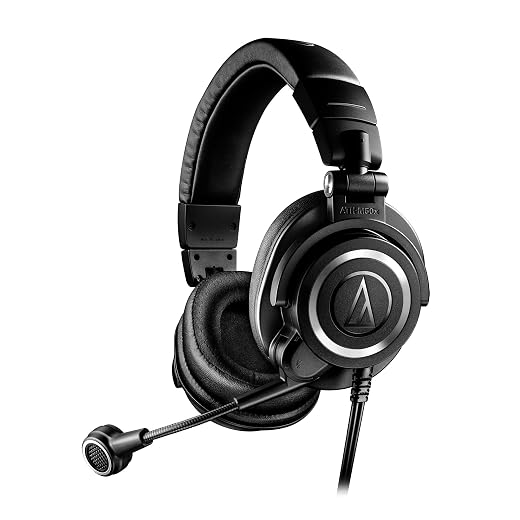
Audio-Technica ATH-M50xSTS-USB StreamSet Headset
Best headphone + mic combo for streamers
8/10
EXPERT SCORE
A convenient all-in-one streaming headset pairing legendary ATH-M50x drivers with a studio-derived condenser mic. Great for creators who want simple plug-and-play recording with solid headphone fidelity.
Integrated cardioid condenser mic adapted from 20 Series mics
Interchangeable earpads for isolation or breathability
Cons
USB-A or wired-only configurations limit portability
Bulkier than compact desktop headsets
Overview
The ATH-M50xSTS-USB is designed specifically for streamers and content creators who want a single device that provides both quality monitoring and easy voice capture. It blends the M50x sonic character with a boom condenser microphone for clear commentary.
What makes it useful
Cardioid condenser mic provides studio-like articulation for live streams and recordings
Two earpad styles let you choose between isolation (acoustic focus) and comfort/breathability
USB-A plug-and-play configuration simplifies setup on PCs and Macs
Streamers, podcasters, and YouTubers will appreciate how quickly the headset can be deployed without a separate microphone arm or interface.
Practical considerations
If your workflow needs XLR, there is a variant with XLR output, but the USB model is best for easy plug-and-play. It’s heavier than compact headsets and not intended for mobile use, but at a desk it’s an efficient all-in-one solution.
Best Bass
10
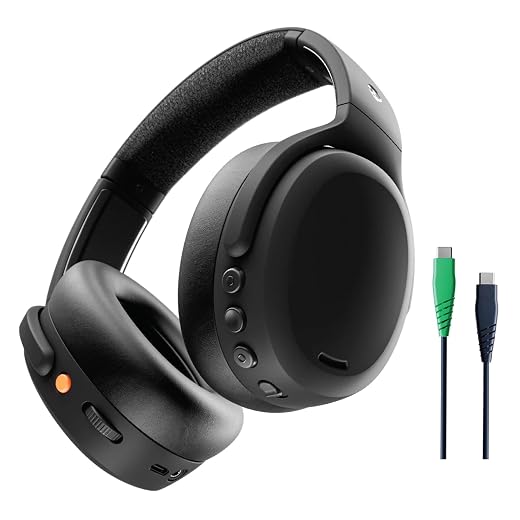
Skullcandy Crusher ANC 2 Sensory Bass Headphones
Best for bass lovers and immersive impact
7.8/10
EXPERT SCORE
A unique sensory bass experience sets these apart—if you want to feel the low end rather than just hear it, this is an obvious pick. ANC and battery life are solid for casual and gym use.
Patented sensory bass tech for tactile low-frequency impact
Adjustable advanced noise cancelling and multiple listening modes
Long battery life with rapid charging option
Cons
Not a neutral or audiophile tuning
Fit and seal can vary by head shape
Overview
The Crusher ANC 2 places emphasis on an experiential, bass-forward sound that you can physically feel. Skullcandy calls this "sensory bass," and it does create a different listening experience compared to neutral or studio-oriented headphones.
Key strengths
Dual bass drivers and full-range drivers designed to deliver tactile low frequencies
Adjustable advanced noise cancelling, Skull-iQ app personalization, and multi-point pairing
Up to ~60 hours (advanced noise cancelling off) battery life and fast charge benefits
These are ideal for listeners who prioritize punch, gaming immersion, or watching action-heavy media where the "impact" matters more than strict accuracy.
Practical trade-offs
If your priority is clarity and reference-level accuracy, these will feel colored. They excel when you want fun, visceral sound rather than neutral fidelity. They’re a strong lifestyle choice for casual listeners, gamers, and anyone who loves pronounced bass.
Final Thoughts
Pick the Sony WH-1000XM6 Next-Gen Noise-Cancelling Headphones if you want the absolute best all-around performer. Strengths: class-leading advanced noise cancelling, studio-quality tuning, ultra-clear calls, and adaptive optimizations for varied environments. Ideal use case: frequent flyers, commuters, and remote workers who need top-tier noise suppression and excellent call performance.
Choose the Bose QuietComfort Ultra Spatial Audio Headphones if immersive listening and long-wear comfort matter most. Strengths: standout spatial audio with CustomTune personalization, solid noise cancellation, and plush materials for extended sessions. Ideal use case: movie watchers, creatives, and anyone who wants a more theatrical, space-focused listening experience.
I feel like Bose QuietComfort Bluetooth (non-Ultra) is underrated these days. People chase the latest and forget how solid the older QC models are — balanced sound, comfy, and priced well on sale. If you don’t need Spatial Audio or the newest bells, save some $$ and get a prior gen.
Great reminder — previous gen Bose models are still excellent value, especially if you mainly want comfort and reliable ANC without the highest-end features.
Question for anyone who owns both: is the XM6 worth upgrading from the XM5? I mostly use headphones for podcasts and the occasional EDM session. The review numbers are close (9.5 vs 9.4) but I don’t want to pay a huge premium if improvements are marginal.
Good question — XM6 brings more mics and processing improvements, which helps calls and adaptive ANC. If you mostly do podcasts, XM5 is still excellent. Upgrade if you want the absolute top ANC and call performance.
Skullcandy Crusher ANC 2 = bass like a mini earthquake. If you’re into feeling the beat in your chest during workouts, these are hilarious and kinda addictive. Not for audiophile purists, obv. Also the sensory bass is borderline ridiculous in a good way. lol
Quick note about battery life: Sony claims long hours but adaptive features and ANC modes change how long they actually last. On international flights I like something that hits 20+ hours with ANC on.
Has anyone tested real-world battery on XM6, Bose QC Ultra, or Skullcandy Crusher ANC 2 during a long flight with movies and calls mixed in? Curious about real numbers, not just specs.
Real-world tends to be lower: XM6 usually survives 20-25 hours with ANC and moderate volume, Bose QC Ultra around 18-22, and Crusher ANC 2 can hit near 40-50 if you disable some features but with ANC on expect ~35-40. Your usage (calls, BT codecs, volume) will swing that.
I love the idea of the Sennheiser HD 600 for at-home listening, but I’m a little intimidated by the amp/DAC requirement mentioned in the verdict.
Can someone recommend a beginner-friendly amp or DAC/amp combo that won’t break the bank? I mostly listen to jazz and acoustic stuff.
Also, are these comfortable enough for 2-3 hour sessions? Any real-world tips welcome!
Good point — the HD 600 really shines with a decent amp/DAC. For starters, the Schiit Fulla or Topping E30 + A30 stack are affordable and clean. They’re very comfortable but expect a firmer clamp than modern cushy ANC cans.
Traveling frequently and torn between the JBL Tour One M2 and the Bose QuietComfort Ultra.
I’ve read Bose has better spatial audio, but JBL promises adaptive ANC which seems handy on planes.
Anyone flown with either and can speak to which blocks cabin noise better, and which is comfier on long-haul flights?
Both are solid. Bose QC Ultra edges out for overall comfort and spatial immersion, while JBL’s adaptive ANC helps in variable environments like busy airports. For long-haul comfort, Bose often wins.
If you’re sensitive to pressure changes, JBL’s Smart Ambient modes were useful for me when moving through crowds, but Bose had the better nap-friendly fit.
Anyone compared the Audio-Technica ATH-M50xBT2 to the ATH-M50xSTS-USB for creator work? I need good headphone sound plus a reliable mic for streaming. The review makes the StreamSet sound tempting but I’m worried the headphones included there might not be as comfortable for long sessions.
StreamSet is convenient for beginners — plug-and-play mic with decent headphone fidelity. If you already have a separate mic or prefer better headphone comfort, the BT2 is sturdier for long wear.




I feel like Bose QuietComfort Bluetooth (non-Ultra) is underrated these days. People chase the latest and forget how solid the older QC models are — balanced sound, comfy, and priced well on sale. If you don’t need Spatial Audio or the newest bells, save some $$ and get a prior gen.
Agree. I grabbed the older QC on sale and it’s perfect for podcasting and commuting. Less hype, more practicality.
Also check refurbished units from reputable sellers — you can get like-new performance for much less.
Great reminder — previous gen Bose models are still excellent value, especially if you mainly want comfort and reliable ANC without the highest-end features.
Question for anyone who owns both: is the XM6 worth upgrading from the XM5? I mostly use headphones for podcasts and the occasional EDM session. The review numbers are close (9.5 vs 9.4) but I don’t want to pay a huge premium if improvements are marginal.
Also keep an eye out for seasonal discounts — XM5 prices dip often when a new model arrives.
I had XM5 and switched to XM6 for work calls. The difference in voice clarity during noisy commutes was night/day. For music only, XM5 is fine.
Good question — XM6 brings more mics and processing improvements, which helps calls and adaptive ANC. If you mostly do podcasts, XM5 is still excellent. Upgrade if you want the absolute top ANC and call performance.
If budget is tight, grab the XM5 on sale — they’re still some of the best ANC cans you can get.
Skullcandy Crusher ANC 2 = bass like a mini earthquake. If you’re into feeling the beat in your chest during workouts, these are hilarious and kinda addictive. Not for audiophile purists, obv. Also the sensory bass is borderline ridiculous in a good way. lol
I bought them for the gym and they’re perfect. Just FYI the ANC isn’t as sophisticated as Sony/Bose, but it’s fine for loud environments.
Haha — great description. Yep, Crusher ANC 2 is intentionally tactile; not neutral but perfect for movies/gaming and bass heads.
Quick note about battery life: Sony claims long hours but adaptive features and ANC modes change how long they actually last. On international flights I like something that hits 20+ hours with ANC on.
Has anyone tested real-world battery on XM6, Bose QC Ultra, or Skullcandy Crusher ANC 2 during a long flight with movies and calls mixed in? Curious about real numbers, not just specs.
Real-world tends to be lower: XM6 usually survives 20-25 hours with ANC and moderate volume, Bose QC Ultra around 18-22, and Crusher ANC 2 can hit near 40-50 if you disable some features but with ANC on expect ~35-40. Your usage (calls, BT codecs, volume) will swing that.
Pro tip: bring a small power bank and the included cable. Even mid-flight USB charging can extend your session if needed.
I flew 12 hours with XM6 and had ~60% left after 3 movies + music. So it’s pretty efficient in practice.
Skullcandy lasted me 2 full transatlantic legs (50+ hrs total with mixes of ANC & bass boost) — very impressive battery life.
I love the idea of the Sennheiser HD 600 for at-home listening, but I’m a little intimidated by the amp/DAC requirement mentioned in the verdict.
Can someone recommend a beginner-friendly amp or DAC/amp combo that won’t break the bank? I mostly listen to jazz and acoustic stuff.
Also, are these comfortable enough for 2-3 hour sessions? Any real-world tips welcome!
I use a Fiio K5 Pro with the HD 600 and it’s a great combo under $300. Warmth and detail are superb.
If you want plug-and-play, look at the Schiit Modi/Heretic combos or even an iFi Zen DAC — they’re easy and sound great for jazz.
Good point — the HD 600 really shines with a decent amp/DAC. For starters, the Schiit Fulla or Topping E30 + A30 stack are affordable and clean. They’re very comfortable but expect a firmer clamp than modern cushy ANC cans.
Traveling frequently and torn between the JBL Tour One M2 and the Bose QuietComfort Ultra.
I’ve read Bose has better spatial audio, but JBL promises adaptive ANC which seems handy on planes.
Anyone flown with either and can speak to which blocks cabin noise better, and which is comfier on long-haul flights?
Flew 10+ hours with Bose QC Ultra — pads stayed comfy and the spatial audio made movies enjoyable. JBL is great if you want punchier sound.
Both are solid. Bose QC Ultra edges out for overall comfort and spatial immersion, while JBL’s adaptive ANC helps in variable environments like busy airports. For long-haul comfort, Bose often wins.
If you’re sensitive to pressure changes, JBL’s Smart Ambient modes were useful for me when moving through crowds, but Bose had the better nap-friendly fit.
I take JBL on short trips; for the long flights I go Bose. Also check ear temperature — JBL runs a tad warmer for me.
Anyone compared the Audio-Technica ATH-M50xBT2 to the ATH-M50xSTS-USB for creator work? I need good headphone sound plus a reliable mic for streaming. The review makes the StreamSet sound tempting but I’m worried the headphones included there might not be as comfortable for long sessions.
StreamSet is convenient for beginners — plug-and-play mic with decent headphone fidelity. If you already have a separate mic or prefer better headphone comfort, the BT2 is sturdier for long wear.
I used the BT2 for months for editing and switched to a dedicated mic later. The BT2 pads are fine but not as breathable as some competitors.